
Sias News

University Conducts Earthquake Emergency Evacuation Drill

August 3, 2026 Editor:ELLY

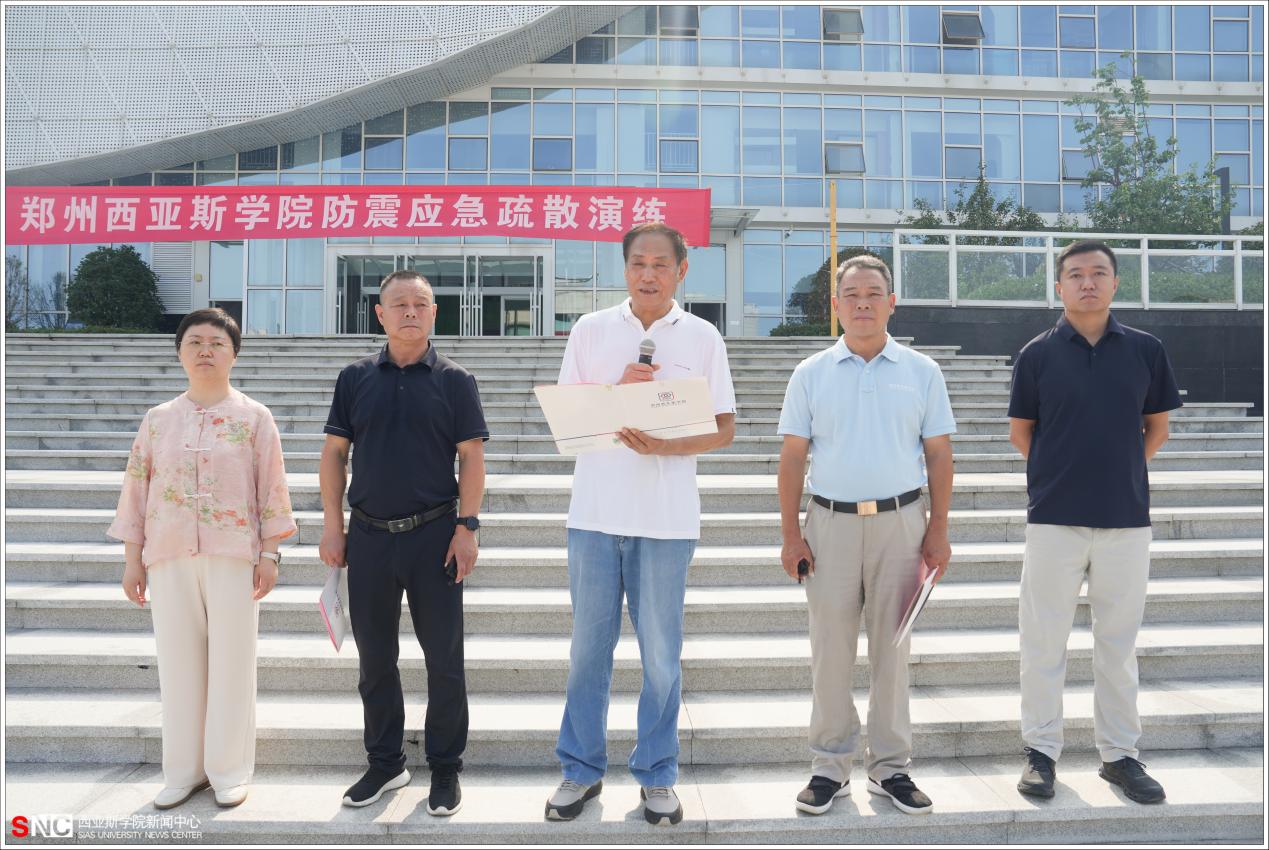
On the morning of July 24, the university conducted a specialized earthquake emergency evacuation drill at Teaching Building T12. Vice President Yuan Guanglin served as the chief commander of the drill, with more than 400 faculty members and students participating in the practical simulation.

At 9:00 a.m., the earthquake warning alarm was activated. Participating faculty and students immediately carried out emergency protective measures according to the standard procedures of “Drop, Cover, and Hold On.” After the evacuation command was issued, instructors guided students to evacuate in an orderly manner through the front and rear exits. Following the designated evacuation routes, participants quickly reached the safety assembly area on the west side of the campus.

The drill covered the entire emergency response process, including on-site protection, organized evacuation, personnel counting, and a comprehensive building clearance inspection. All support teams responded promptly and worked collaboratively, ensuring that the entire procedure was conducted in a standardized, efficient, and orderly manner.

After the drill, Vice President Yuan Guanglin stated that the exercise comprehensively tested the feasibility of the university’s earthquake emergency response plan and the coordination capabilities of multiple departments. The drill successfully achieved the goals of ensuring safety, rapid response, and orderly evacuation. He emphasized that campus safety is the fundamental guarantee for the university’s development. All departments should use this drill as an opportunity to review and improve emergency procedures, identify potential weaknesses, and continue regular disaster prevention and safety education. He called for maintaining the principle that “although earthquakes may not occur for a thousand days, preparedness is required every single day,” while continuously strengthening the campus safety and risk prevention system.

The drill was organized under the overall coordination of the Logistics Service Center, with joint participation from multiple departments, including the Security Office, Academic Affairs Department, and University Clinic. Through this practical exercise, the university further promoted earthquake prevention and disaster reduction efforts and effectively improved faculty members’ and students’ abilities in emergency response, self-protection, and mutual assistance.

Moving forward, the university will continue to conduct various types of safety emergency drills on a regular basis, further strengthen campus safety measures, and comprehensively protect the lives and property of faculty members and students.


Share to: